
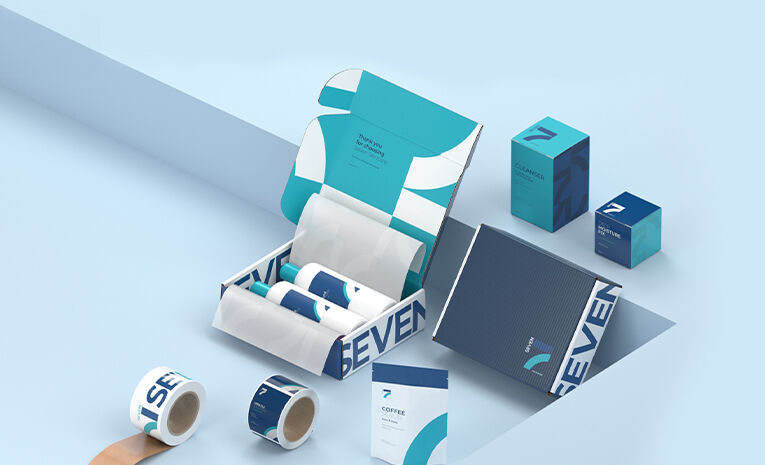
Beginner’s Guide to Packaging
Good packaging does more than hold a product. It protects your item, communicates your brand, and helps customers understand why they should choose you. Whether you're launching a new product or refreshing an existing one, this guide walks you through the essentials so you can make smart decisions with confidence.
What Is Product Packaging?
Product packaging is anything that contains, protects, or presents your product for sale. This includes simple wraps and sleeves, full retail cartons, jars with custom labels, flexible pouches, hang tags, and more.
Examples include:
- A glass jar of jam with a printed label
- A cardstock box containing a children’s toy
- A stand-up pouch filled with granola
- A sleeve wrapped around a bar of soap
- A branded price tag attached to a garment
If it holds your product or helps present it to the customer, it qualifies as packaging.
Why Packaging Matters
Every product has different needs, but most packaging supports a combination of the following functions.
Protection
Fragile items like candles, glass, and electronics need structural support, so
they survive transport and retail handling.
Portability
Small tissue packs, snack pouches, and travel-sized products stay with
customers on the go.
Freshness and storage
Items like coffee, snacks, or vitamins often need resealable packaging to stay
usable over time.
Branding
Colors, visuals, textures, and materials help communicate your personality and
quality.
Marketing
Front panel claims, product benefits, and promotional messages influence
purchase decisions.
Regulatory compliance
Some items require specific packaging, such as child-resistant caps for
medications or ingredient statements and labeling requirements for food.
Packaging affects how your product performs and how it is perceived. Good packaging increases sales and reduces damage, loss, and returns.
How to Choose the Right Packaging
You can simplify the process by evaluating three main areas: the product, the sales channel, and the end user.
1. Requirements of the Product
Answering a few key questions will guide you to the correct structure.
- Is the product fragile?
- Is it liquid, granular, or powder?
- Does it require freshness protection or a barrier against light?
- Is the product heavy or lightweight?
- Does it need to be resealed over time?
- Does the product have sharp edges or an unusual shape?
For example:
- A liquid or loose snack needs a jar or pouch
- A fragile item requires cushioning or a rigid box
- A perishable or aromatic item often needs a sealed film or barrier material
Your product always determines your minimum packaging requirements.
2. Requirements of the Sales or Distribution Channel
Where and how your product will be handled matters just as much as what it is.
Retail distribution
Primary packaging is often lightweight; you may need stronger secondary
packaging, so everything arrives safely to the store.
Direct-to-consumer shipping
Primary packaging must survive shipping carriers, so you may need a corrugated
box or custom insert.
Third-party fulfillment centers
Companies like Amazon or Walmart have specific rules regarding dimensions,
labeling, and whether an item ships in its own container.
Your packaging should support your logistics and help your product look great when the customer finally opens it.
3. Requirements of the End User
Packaging is part of the product experience. Consider how your customer will interact with it.
- Will they use the product over time and need to reseal the package?
- Will older customers need larger text or easier opening?
- Does the packaging need to feel premium for a luxury brand?
- Is portability important, such as travel sizes or snack packs?
- Will the user display or store the package for long periods?
Sometimes the only difference between two product variations is the packaging format, such as single use sachets versus large refill pouches.
Why Branding and Design Matter
Branding isn’t just an exercise in aesthetics. Packaging design strongly influences buying decisions. A study by the Paper and Packaging Board found that 72% of consumers say packaging design affects whether they purchase a product.
Here are simple ways to make your design effective:
Know your audience
Use hard-to-read fonts or trendy colors only if they serve your target
customer. Large, legible text may be more important for seniors. Bold patterns
can appeal to younger audiences.
Keep it clean and simple
Avoid overcrowding your layout. A clear hierarchy helps customers understand
the product at-a-glance.
Use descriptive copy
Highlight what matters most.
- What is it?
- Who is it for?
- Why is it better than other options?
- How is it used?
If you are designing food or drug packaging, review FDA labeling requirements to make sure everything is accurate.
Thoughtful design builds trust and supports long term brand loyalty.
How to Get Started
1. Study competitors and retail environments
Look at what is standard in your category and what gaps you can fill.
Are there opportunities to stand out with structure, color, or usability?
2. Test how your product fits into different packaging types
Check ease of opening, durability, storage, and shelf appeal.
3. Ask for feedback
Talk with customers, sales teams, fulfillment teams, and retailers. They can tell you what is working and what causes friction.
4. Order prototypes or samples
Packola allows you to order as little as one unit for many products, which makes testing easy. Hold the packaging, review the print, check the fit, and confirm if the packaging performs the way you expect.
5. Iterate and refine
Small adjustments in size, structure, or finish can significantly improve the customer experience.
If you need guidance at any point, our Packola packaging experts are here to help. Call 1 855 PACKOLA or email info@packola.com.